


Uncovering William Stringer’s WW1 Experience
Every year the Humanities Faculty at Matthew Moss High School welcome Bill Smith and his Great War Workshop to engage our Year 8s alongside our learning on World War One. During the delivery of one of these sessions, Gracie Platt explained that her Grandad has a memorial penny at home from her Great Great Grandad ‘William Stringer’.

After the session Bill and Gracie began to look further into the archives and found details of Williams service number. Bill took these details away to uncover more information. Within days Bill was back in touch with school to inform us that he had found extensive details of William’s story and information about his death which had featured with a picture in the Rochdale Observer in 1917.
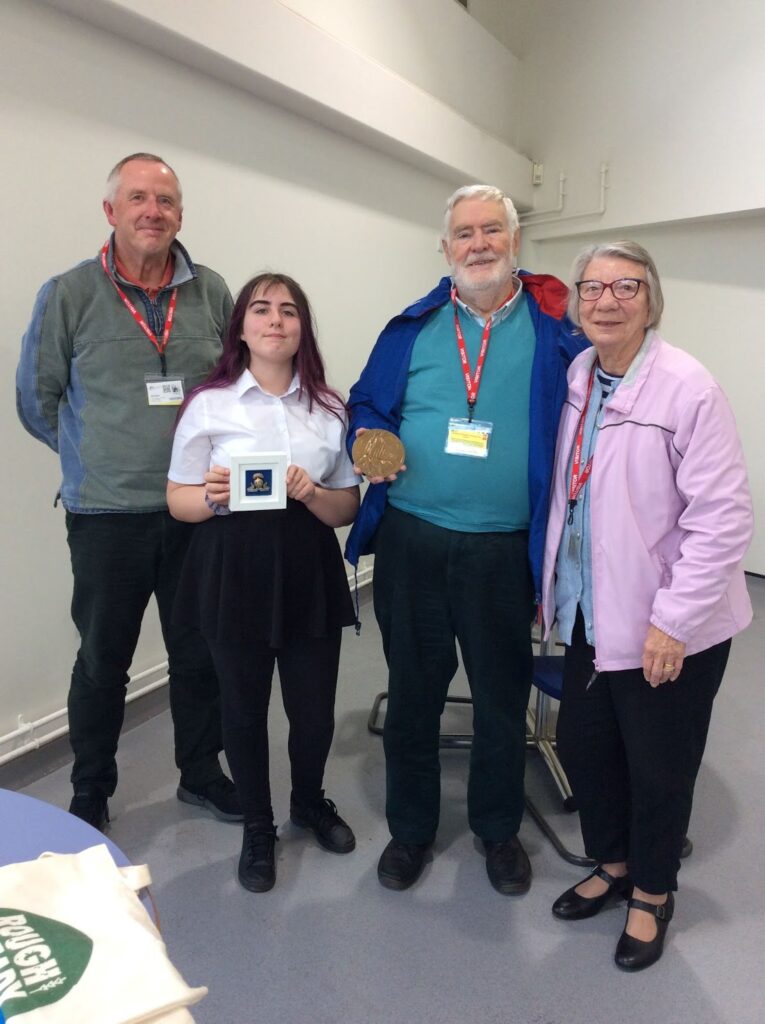
Bill then revisited school to meet with Gracie and her Grandparents to go through all of his findings. Bill was able to give diary accounts of the whereabouts of William and his role during the war. Bill thoroughly explained how William was part of the 3/5th Battalion Lancashire Fusiliers and arrived in France on the 1st March 1917.
William and his Battalion went into trenches for the first time near Givenchy (north of Lens). For three months the Battalion supported the line and he was moved to an area north to the Dunkirk area.
By the 27th September the Battalion travelled by bus from the Dunkirk area to Campagne-les-Wardrecques (SE of St Omer). From here they then marched 16 miles from Campagne-les-Wardrecques to billets at Eecke (between Hazebrouck and Steenvorde). Williams chief officer described “the day was very hot and the roads dusty”. However the weather changed and by the 4th October the Battalion marched 6 miles from Eecke to camp north of Winnezeele. “A wet and depressing day; accommodation in the camp very poor. HQ the dirtiest the CO had yet experienced in 28 months with the BEF”. The soldiers were then taken by bus to Brandhoek and then marched 10 miles to the east of Ypres near to Frezenberg Ridge. Here they camped in tents which were described as “intensely uncomfortable; very wet”. Here they were “shelled intermittently but without any casualties”.
The plan had been for the Battalion to move into the line to relieve 2/7th Manchesters overnight 6th/7th and take up positions in front line trenches. At the time there were 21 officers and 658 other ranks. On the 8th October the Battalion was ordered to march at 6pm approx 3 miles to the front line. They were due to be guided by an Australian troop, however due to the mud the journey was very difficult. The Battalion marched off at 6.30pm “delayed by shelling” and to be deserted by the guide less than half way. The soldiers moved one by one in the black of night, fearful of getting stuck in the mud. The Battalion eventually reached the end of track at about 5.15am and the Companies “at once advanced to the attack”. William and his fellow men attacked at 5:20am and had to cover a distance of 600 yards to capture the German Red Line. The Battalion managed this, however with casualties, 4 officers and 42 other ranks were killed . Unfortunately William was one of these, his remains were identified and recovered, from a point close to the ‘Red Line’ of October 1917. He was identified by means of his ID discs and pay book. He was re-interred at Dochy Farm New British Cemetery. The cemetery was made after the Armistice when isolated graves were brought in from the battlefields of Boesinghe, St. Julien, Frezenberg and Passchendaele. The cemetery now contains 1,439 burials and commemorations of the First World War.
Bill supplied Gracie and her family with diary entries, map references, death and pension certificates, and even census information about William’s whereabouts in Rochdale prior to the war, and the family’s whereabouts afterwards. Gracie’s family now have their WW1 family story to continue to pass on for generations. Bill also presented Gracies Grandad Anthony with a Lancashire Fusiliers pin badge to honour WIlliams Story. Bill went above and beyond to meet with the family, one which was positively received by Gracie and her Grandparents. Thank you to Bill and his expertees. Matthew Moss would highly recommend Bill’s Great War Workshop, the learners thoroughly enjoyed the experience and it helped to contextualise and promote empathy to those involved in the war.


